









US Tax Guide 2026 for Citizens: What Americans Need to Know
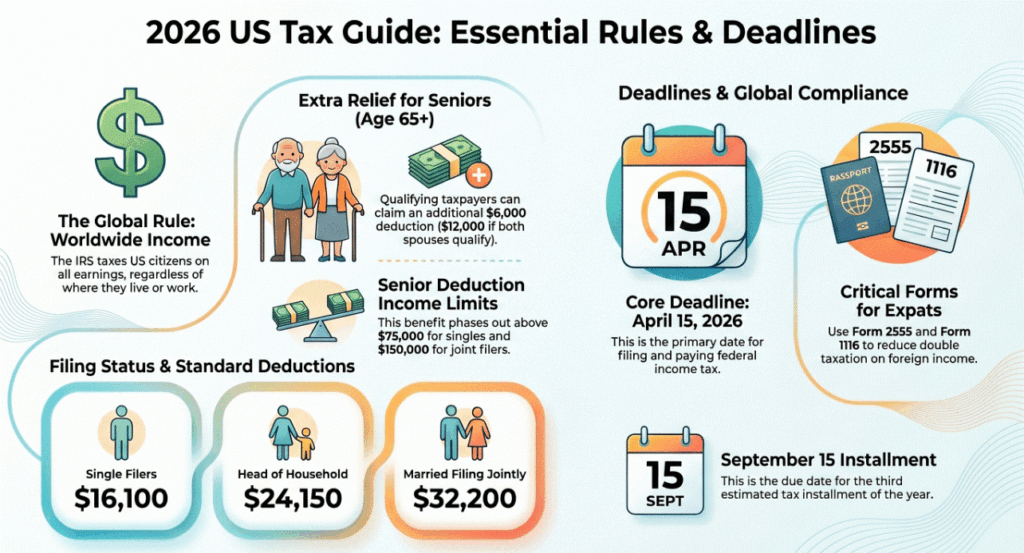
Tax season can feel confusing, but for US citizens in 2026, the basics are still built around one big rule: the IRS taxes citizens on worldwide income. That means your salary, business income, investments, rental income, and many foreign earnings may all matter when you file your return.
This guide breaks down the key 2026 tax points in simple language so readers can understand filing thresholds, deductions, deadlines, and common mistakes. It is written for everyday US citizens, including people living in the US and those living abroad.irs+1
2026 Filing Basics
Most US citizens file Form 1040 if their income is high enough to meet the IRS filing threshold for their status and age. The filing requirement depends on whether you are single, married filing jointly, married filing separately, head of household, or a qualifying surviving spouse.
The 2026 quick tax reference materials show updated federal tax bracket information and standard deduction figures for the tax year used in the 2026 filing season. For example, the standard deduction reference shown lists $16,100 for single filers and $24,150 for head of household, while married filing jointly is listed at $32,200.
Income That Counts
US tax law does not only focus on wages from a US employer. It can also include self-employment income, dividends, interest, rental income, and capital gains, along with foreign-source income for citizens who live outside the country.
That worldwide-income rule is especially important for Americans abroad, because tax obligations can continue even when the taxpayer lives and works in another country. In other words, moving overseas does not remove the filing requirement for a US citizen.
Important 2026 Deductions
Older taxpayers may get extra relief in the 2026 filing season. The IRS says that for tax years 2025 through 2028, taxpayers age 65 or older may qualify for an additional $6,000 deduction per person, or $12,000 if married filing jointly and both spouses qualify.
That extra deduction phases out for taxpayers with modified adjusted gross income above $75,000 for single filers and $150,000 for joint filers. It is available whether the taxpayer uses the standard deduction or itemizes deductions.
Deadlines To Remember
For most US citizens, the core deadline for filing and paying federal income tax is April 15, 2026. Some taxpayers may also need to think about estimated tax installments during the year if they do not have enough tax withheld from wages or pensions.morganstanley+1
A tax reference guide from 2026 shows estimated tax installment deadlines spread through the year, including a third installment due on September 15, 2026. Staying ahead of these deadlines can help avoid penalties and interest.
US Citizens Abroad
Americans living overseas often need extra forms because of foreign income, foreign tax paid, or foreign financial accounts. Common forms mentioned in 2026 guidance include Form 2555 for the foreign earned income exclusion, Form 1116 for the foreign tax credit, FBAR for foreign accounts above the reporting threshold, and Form 8938 for certain foreign assets.
The same source notes that the foreign earned income exclusion and foreign tax credit are the main tools many expats use to reduce double taxation. For many citizens abroad, these forms can make a major difference in the final tax bill.
Common Mistakes
One common mistake is forgetting that the IRS looks at worldwide income, not only US-based income. Another is assuming that having foreign taxes paid means no US filing is required, which is not always true.
Other mistakes include missing the April deadline, ignoring estimated tax payments, and not reporting foreign accounts or foreign assets properly. These errors can lead to penalties, so careful recordkeeping matters.
Simple Filing Strategy
A practical filing process is to start with your income records, then check your filing status, age-based deduction eligibility, and any credits or foreign tax forms you may need. After that, compare whether the standard deduction or itemized deductions gives you a better result.
If you earned money outside the US, keep documentation for foreign wages, taxes paid, exchange rates, and account balances. That information is often what makes the difference between a smooth filing and a stressful correction later.
US Tax Guide 2026 for Citizens: Filing Rules, Deductions, and Deadlines
2026 US Tax Guide for Citizens: What Every American Needs to Know
US Tax Filing 2026: A Complete Guide for American Citizens
2026 Tax Guide for US Citizens: Income, Deductions, and Key Updates
Final Take
The 2026 US tax guide for citizens is really about three things: know what income counts, know which deductions or credits apply, and know your deadlines. The IRS rules are manageable when you break them into steps, but they can become expensive if you wait too long or miss reporting duties.irs+1
For most citizens, the smartest move is to file early, track all income carefully, and review whether you qualify for deductions tied to age, family status, or foreign taxes. That approach keeps the process simple and lowers the chance of costly mistakes.
This is general guide for education purpose for specific guidance and filing the tax contact to tax experts